When you publish your books via Amazon, you will be asked whether you would like to enrol your books to the KDP select program. This means that the ebook format of your book will be exclusive to Amazon.
While digital copies of the book must only be sold through Amazon:
A 10% sample of the book can be made available outside of the Kindle Store;
Print (or any other non-digital) versions can be distributed elsewhere; and
Copies of the book can be emailed to reviewers.
One of the main advantages of the KDP select program (otherwise known as Kindle Unlimited) is that all readers enrolled in the program will be able to download your book for free. You will then be paid by Amazon when your book is read. Amazon pays on average: $0.0045 per every page read.
Amazon has worked very hard over the past decade to make themselves the dominant force in ebooks and self-published work. They have made Kindle accessible to not only Kindle owners but anyone that owns a smart device. The Kindle app is free to download on all devices, therefore encouraging customers to use Amazon systems over iBooks or Google Play, for example.
What is the wide strategy?
The wide strategy means opting out of KDP select, to allow yourself to sell your eBooks through a wider range of distributors/book store. Large stores include:
Barns & Noble
Kobo
Google Play
Apple iBooks
You can also use distributors which have the ability to reach the far corners of the globe to allow more people to access your books.
Do you think that going wide would suit you and your books?
Choosing the right point-of-view (POV) is one of the most important decisions you’ll make when writing fiction. It shapes how readers connect with your characters, how much they know, and how they experience your story’s world.
In this beginner’s guide, we’ll break down the main types of POV in fiction, explore their strengths and challenges, and help you decide which is right for your project.
What Is Point-of-View in Fiction?
Point-of-view refers to the lens through which the reader experiences the story.
It determines who is telling the story and how much they know, and from this how much the reader is allowed to know. The choice of POV will also affect the voice, tone, intimacy, and structure of the final story.
Why Does POV Matter?
Your story could change dramatically depending on the narrator. A first-person account may feel raw and personal. A third-person omniscient voice could reveal the inner lives of an entire cast. Knowing your POV options gives you control over pacing, suspense, and emotional impact.
The 4 Main Types of POV in Fiction
There are four main point-of-view writing styles, each with their own strengths and challenges. The story you want to tell, and how you want to tell it, will inform your POV choice as much as this choice will influence the final structure of your book.
1. First Person (I, Me, My)
Definition: In first person point-of-view (or first-person narrative/first-person perspective), the story is told through the eyes of one character in the story, this could be a protagonist, or other witness retelling events. Stories told from this POV are experienced through one interpretation of the events as they unfold, coloured by that character’s thoughts, emotions, biases and understanding of the world they inhabit.
Strengths of First Person
1. Deep Emotional Immersion First person offers unparalleled access to a character’s internal world. By placing a reader inside the mind of the narrator you can give them the experience of every doubt, hope, fear, and moment of triumph from an intimate vantage point. This can build a powerful emotional bond between character and reader—one that often leads to lasting impact.
2. Authentic Voice and Personality This POV allows the character’s personality to shape the narrative style itself. Their sense of humour, quirks, education level, and emotional state can colour the prose in subtle (or less than subtle) ways. This can make the writing feel vibrant and uniquely tailored to that character’s worldview.
3. Heightened Tension and Mystery Because the reader only knows what the narrator knows, this POV naturally creates tension, suspense, and room for surprise. When used intentionally, it can make reveals feel more personal or shocking.
4. Ideal for Confessional or Reflective Tone Writers can utilise this voice to give a diary-like, confessional voice, perfect for stories that involve personal growth, trauma recovery, coming-of-age arcs, or moral conflict.
Challenges of First Person
1. Limited Perspective The reader is confined to the narrator’s knowledge and observations. You can’t easily show what’s happening elsewhere or inside other characters’ minds without relying on speculation, dialogue, or indirect clues. This restriction can limit complexity if not carefully managed.
2. Potential for Monotony Over-reliance on the pronoun “I” or on the narrator’s inner monologue can become repetitive. If the character’s voice isn’t compelling or distinctive enough, the story may feel flat or self-indulgent.
3. Risk of Unreliable Narration (Intentional or Not) Unless carefully handled, readers may question whether they’re getting a full picture. This can be a strength when writing an intentionally unreliable narrator—but it can undermine clarity or trust if done unintentionally.
4. Worldbuilding Limitations In speculative or intricately plotted stories, first person can make it harder to introduce complex backstory or world details without info-dumping or unnatural exposition. However this limitation can come with advantages. Dropping your reader into the heart of an already established world, and assuming that through immersion they will understand, can bring your reader right into the heart of the story before they know it.
Dual Perspective You can play with first person POV by using a dual perspective to bounce between two characters. This allows your reader to better understand the world they find themselves in. It can also allow you to play with the reliability of your narrators and show a greater portion of the world you have built.
When to Use First Person POV
First person is best suited to stories that:
Focus on internal transformation or emotional journeys
Explore personal identity, memory, or psychological conflict
Require a strong, compelling narrative voice
Benefit from intimacy, vulnerability, or confessional tone
Gain impact from subjective truth or unreliable narration
This POV shines when the author wants the reader to feel like they are living inside the character’s head—experiencing each moment in real time, rather than watching from a distance.
If you’re aiming for a story that feels raw, immediate, or emotionally authentic, first person is likely a strong fit. It helps readers connect not just to events, but to the meaning those events hold for the narrator.
2. Second Person (You, Your)
Definition: In second person point-of-view, the narrator addresses the reader directly as “you,” casting them as the main character in the story. By becoming the protagonist, the reader experiences events, thoughts, and emotions directly as if they are unfolding in real time.
Strengths of Second Person
1. Heightened Immersion Second person POV can create an immediate and visceral sense of involvement. Because the reader is being directly addressed, there’s little distance between them and the action causing the narrative to feel intense, urgent, or incredibly personal.
2. Unique Psychological Impact This perspective can be particularly powerful when writing about internal conflict, guilt, obsession, or trauma. It blurs the line between narrator and reader, pulling the audience deeper into emotionally charged or morally ambiguous territory.
3. Compels Engagement The use of “you” disrupts passive reading. Readers are no longer just observing a character’s decisions—they are implicitly making them. This makes second person a great tool for introspection or tension, especially in stories that hinge on choice or consequence.
4. Ideal for Experimental or Stylized Writing Second person opens the door for innovation. It’s well-suited to unconventional narratives, nonlinear timelines, metafiction, or speculative scenarios where a disorienting or dreamlike quality enhances the tone. It also works well in short-form writing like flash fiction, vignettes, or monologues.
Challenges of Second Person
1. Difficult to Sustain in Long Works Maintaining second person POV over a full novel can exhaust the reader or feel forced. It works best when used intentionally and sparingly, often in shorter works or alternating POV structures.
2. Risk of Alienating Readers Some readers may resist being told what they think or feel—especially if the “you” doesn’t align with their personal experience. This POV requires precision and nuance to avoid disconnection or disbelief.
3. Limited Range for Character Development Because the protagonist is “you,” the writer must either keep descriptions vague or risk creating a disconnect if the reader doesn’t identify with the choices, background, or emotions being described. There’s less room for layered backstory or detailed internal evolution unless written carefully.
4. Can Feel Gimmicky If Misused Second person is powerful, but only when the style serves the story. If it’s not integral to the emotional or structural core, it may come off as an attention-grabbing trick rather than a meaningful narrative choice.
When to Use Second Person POV
Second person POV works well when the story:
Needs to feel immediate, immersive, or psychologically intense
Explores themes of identity, control, regret, or powerlessness
Benefits from a surreal, experimental, or disorienting effect
Leans into ambiguity, introspection, or direct confrontation
Invites the reader to question their role, morality, or reality
This POV is especially effective in stories where the reader’s complicity, hesitation, or imagination is part of the narrative experience. It often evokes a stream-of-consciousness or dreamlike tone, especially in literary fiction or emotionally intimate shorts.
Second person can be a bold and memorable choice—if you’re crafting a story that seeks to break the fourth wall, disturb the reader’s comfort, or make them feel seen, implicated, or unsettled, this POV delivers.
3. Third Person Limited (He, She, They)
Definition: In third person limited point-of-view, the narrator tells the story from outside the character, but remains closely aligned with one character’s thoughts, emotions, and experiences at a time. Readers follow this character’s perspective as the lens through which the world is interpreted, without straying from this character’s immediate surroundings. This, like first person POV can benefit from dual perspective to allow for a wider view of the world to be shown to the reader.
3. Third Person Limited (He, She, They)
Definition: In third person limited point-of-view, the narrator tells the story from outside the character, but remains closely aligned with one character’s thoughts, emotions, and experiences at a time. Readers follow this character’s perspective as the lens through which the world is interpreted, without straying from this character’s immediate surroundings. This, like first person POV can benefit from dual perspective to allow for a wider view of the world to be shown to the reader.
Strengths of Third Person Limited
1. Balanced Intimacy and Narrative Distance This POV offers balance between closeness and flexibility. While readers gain deep insight into the character’s internal life, the “he/she/they” narrative voice still creates enough distance for objectivity, reflection, or broader storytelling.
2. Clarity and Focus Limiting the viewpoint to a single character per scene or chapter keeps the story grounded and emotionally cohesive. It allows readers to track the protagonist’s motivations and development clearly, while avoiding the chaos of multiple conflicting viewpoints.
3. Ideal for Character-Driven and Plot-Driven Stories Alike Third person limited is adaptable. It’s equally suited for internal journeys (exploring grief, identity, resilience) or external action (crime, fantasy, romance). Writers can use the intimacy of first person while retaining third person’s smoother handling of exposition and world-building.
4. Elegant Handling of Backstory and Description Because the narration is slightly distanced from the character’s voice, authors can blend emotional insight with vivid, stylised prose. This POV allows for changing between the internal monologue and external narration to feel more natural without over-explaining the world around your protagonist.
Challenges of Third Person Limited
1. Restricted Viewpoint You’re confined to what the POV character knows, notices, or believes. Readers only see other characters through that lens—so anything outside their awareness must be implied or delayed. If your plot relies on simultaneous events or hidden motives, this can be limiting.
2. Head Hopping Risk Switching between characters’ perspectives without clear breaks or scene transitions can cause “head hopping,” a jarring shift that confuses readers. Maintaining POV discipline is crucial to avoid breaking the narrative flow, so switching the character being focussed on using chapters can be a great way to stop readers’ heads spinning.
3. Inconsistent Voice Because the narrator’s voice is not fully the character’s voice (unlike first person), it can be challenging to keep the tone consistent. Striking a balance between narration and character-filtered perception is important for the flow of information to the reader, especially in emotionally charged scenes.
4. Can Feel Passive If Voice Isn’t Strong If the POV character’s internal world isn’t rich or distinct enough, the third person limited perspective may feel generic or detached. Developing a strong internal voice—through word choice, sensory details, and emotional nuance—is essential to make this POV shine.
When to Use Third Person Limited POV
Third person limited is a powerful choice when your story:
Follows one main character through a journey of transformation, challenge, or discovery
Benefits from narrative control and emotional intimacy without full immersion
Requires precise pacing or the slow reveal of character knowledge
Incorporates layered themes, relationships, or inner conflict
Involves a story world that the character is still learning or interpreting
This POV is ideal for writers who want to deeply explore a character’s psychology while maintaining narrative flexibility and elegance. It supports subtle shifts in tone, controlled emotional distance, and graceful handling of exposition—without sacrificing connection.
If you’re telling a story that relies on close emotional insight, internal struggle, or a character’s perception shaping the reader’s understanding, third person limited offers the perfect balance of access and control.
4. Third Person Omniscient (He, She, They — All-Knowing Narrator)
Definition: In third person omniscient point-of-view, the narrator exists outside of the story and knows everything about every character, setting, and event—including thoughts, emotions, past histories, and even future consequences. This narrator is all-seeing and often all-knowing, offering a god-like perspective across time and space.
Strengths of Third Person Omniscient
1. Expansive Perspective This POV allows you to explore the entire story world, not just one character’s limited experience. You can reveal (or conceal) multiple characters’ thoughts and motives, describe events happening simultaneously in different locations, and provide context far beyond what a single character could know.
2. Rich Thematic Layering With the ability to zoom in and out, the omniscient narrator can weave connections between characters, events, and overarching themes. You can deliver commentary, foreshadowing, or irony in ways that deepen the reader’s understanding of the story’s message or moral arc.
3. Masterful Control of Tone and Voice Third person omniscient gives the writer freedom to establish a narrative voice distinct from any one character. This can be witty, lyrical, serious, or philosophical—whatever best suits the tone of the story. It’s especially effective when used to add layers of insight or reflection that the characters themselves may not have.
4. Seamless Shifting Between Characters This POV allows smooth movement between different characters’ perspectives without requiring scene or chapter breaks. You can explore how each person experiences the same event, which adds complexity and dimension to relationships, tension, and plot developments.
5. Ideal for Epic, Multi-Layered Stories If you’re writing a novel that involves multiple characters, interwoven plots, or a sweeping timeline, third person omniscient allows you to tackle a broader canvas with fluidity and depth.
Challenges of Third Person Omniscient
1. Risk of Reader Disconnection Because the narrator isn’t emotionally embedded in the story the way a character-narrator would be, there’s a risk of creating emotional distance. If not handled with care, readers may feel like observers rather than participants. However, if you make your god-like narrator enough personality, your reader can develop a connection with them, even potentially sharing a joke at the expense of the characters.
2. Overwhelming Scope Having access to every thought, every setting, and every timeline can tempt writers to include too much. This can dilute focus, slow pacing, or create confusion if transitions between characters or timelines aren’t clear and intentional.
3. Requires Strong Authorial Control To avoid confusion or fatigue, the writer must maintain clear transitions between character insights and establish consistent narrative boundaries. Omniscient narration demands a confident, controlled voice that can carry the weight of the story without overwhelming the reader.
4. Harder to Build Suspense or Mystery Because the narrator can reveal any character’s motives at any time, there’s a challenge in maintaining mystery or surprise. The key is knowing when to withhold information and when to let readers in—using narrative distance strategically, not indiscriminately.
When to Use Third Person Omniscient POV
Third person omniscient is a great choice when your story:
Involves multiple characters with intersecting lives or opposing goals
Spans long time periods, multiple settings, or broad historical/social movements
Requires thematic commentary, irony, or contrast between perspectives
Explores the relationship between personal experience and larger forces (society, fate, history)
Would benefit from a narrator with their own voice or agenda—guiding, questioning, or even challenging the reader
This POV is often used to achieve a grand, sweeping narrative feel—it helps readers step back and view the big picture while still offering access to individual thoughts and emotions when needed. It’s ideal for stories that tackle complex systems, human nature, or philosophical dilemmas, allowing for a chorus of perspectives rather than a single spotlight.
If you want your story to feel vast, layered, and intellectually or thematically ambitious, third person omniscient offers the tools to build that depth.
Objective vs. Subjective Narrators
Even within a specific point-of-view—first person, second person, or third person—narrators can be subjective or objective. Understanding the difference adds another layer of control to how you shape the reader’s experience.
Definition: A subjective narrator shares not just what happens, but how it feels. This narration is filtered through the character’s inner world—complete with emotions, opinions, assumptions, and biases.
Example (Third Person Subjective): She slammed the door, her heart pounding with the fury of betrayal. He hadn’t just lied—he’d broken something inside her.
Key Traits:
Includes emotions, thoughts, and interpretations
Reflects the narrator’s or POV character’s perspective
May be unreliable or biased (intentionally or unintentionally)
Creates emotional resonance and psychological depth
Best Used When:
You want readers to experience the character’s emotional state or have their opinions coloured by the character’ interpretations of events
You’re exploring internal conflict, trauma, or growth
The story benefits from a strong narrative voice or worldview
You want readers to feel immersed in a personal journey
Subjective narration invites the reader to feel more than simply observe—to become emotionally invested in a character’s truth, even when that truth may be flawed or limited.
Objective Narration: Observational, Unfiltered
Definition: An objective narrator presents only what can be physically seen, heard, or described—without revealing internal thoughts or emotions. Think of it like a camera documenting events from the outside.
Example (Third Person Objective): She walked into the room and closed the door behind her. Her hands trembled as she reached for the phone, but she didn’t make a call.
Key Traits:
Omits internal thoughts, feelings, and judgments
Describes only observable action, dialogue, and setting
Allows the reader to draw their own conclusions
Creates space for subtext, ambiguity, or detachment
Best Used When:
You want the reader to interpret events independently
You’re creating dramatic irony or emotional restraint
Your character is emotionally closed off or withholding
The story benefits from mystery, ambiguity, or minimalism
Objective narration can be quietly powerful, especially when the emotional weight is revealed through action, dialogue, or what’s left unsaid. It encourages readers to read between the lines and come to their own conclusions.
Choosing Between the Two: What Experience Do You Want to Create?
Choose subjective narration if your goal is to immerse the reader in a character’s emotions, beliefs, or inner conflict. This style invites empathy, intensity, and personal insight.
Choose objective narration if your story benefits from emotional distance, ambiguity, or impartial storytelling. It gives your audience space to analyze, judge, or remain uncertain.
Sometimes, blending the two styles can create nuanced effects. For example, you might begin a story with a cool, objective tone and gradually slip into subjectivity as a character becomes more emotionally involved—or vice versa.
Quick Tip for Writers: Even in third person limited, you can write more objectively or subjectively, depending on how deeply you want to enter the character’s mind. It’s not just about the POV you choose—it’s about how deeply you dive into it.
How to Choose the Right POV for Your Story
Ask yourself:
Whose story is this really?
How close do I want the reader to feel to the main character?
Do I need to reveal information the protagonist wouldn’t know?
Would multiple perspectives add or distract?
Tip: Test-drive a scene in two or three POVs. See which one feels most alive and true to your story’s voice.
Common POV Mistakes (And How to Avoid Them)
Choosing a point-of-view is only the beginning—executing it consistently is what makes or breaks your storytelling. Three big POV pitfalls include head hopping, overusing “I” (A first person problem)and unclear narrator identities. These can really pull your reader out of the story, so how could you avoid them?
1. Head Hopping (Unintentional Shifts in Perspective)
What it is: Switching between multiple characters’ internal thoughts or perspectives within the same scene or paragraph—without a clear transition.
Why it’s a problem: It can confuse readers, break immersion, and dilute emotional tension. Instead of feeling grounded in one character’s experience, the reader may feel disoriented or unsure who’s guiding the story.
Example (Head Hopping): Sarah clenched her fists, furious at his silence. Jack watched her warily, wondering if she knew the truth. (→ Two internal perspectives in one moment: Sarah’s and Jack’s.)
How to avoid it:
Stick to one character’s viewpoint per scene or chapter unless you’re writing in third person omniscient—and even then, shifting carefully and with intention is needed.
Use scene breaks or line spacing to signal a POV shift clearly. If changing at chapter breaks, add in the name of the character you are now following, or make the opening sentence a clear character change.
Ask yourself: Whose emotional journey is being followed here? Keep the focus on them and don’t get sidetracked.
2. Overusing “I” in First Person
What it is: In first person narratives, it’s easy to fall into the rhythm of starting every sentence with “I”—I did this, I felt that, I saw…
Why it’s a problem: Too much repetition can make the prose feel monotonous or self-centered. It also risks flattening the character’s voice, making them sound more like a narrator than a living person.
Example (Overuse): I walked into the room. I looked around. I didn’t know what to say. I felt nervous.
How to avoid it:
Vary sentence structure: Combine action and description.
Use body language, sensory detail, and internal thought to break the pattern.
Let the world show what the character feels instead of stating it.
A better example would be: The room was too quiet. My fingers curled around the doorknob, slick with sweat. Still no sign of him.
3. Unclear or Inconsistent Narrator Identity
What it is: When the reader doesn’t know who’s telling the story—or the POV shifts unexpectedly without warning or logic.
Why it’s a problem: It undermines trust in the narrative, readers rely on clarity and consistency to emotionally invest in your story. If they’re unsure who’s guiding them, they’ll disconnect.
Common symptoms:
Sudden switches from one character’s thoughts to another’s without warning
A vague or invisible narrator with no defined tone or perspective
Inconsistent use of pronouns or tense
How to avoid it:
Establish the POV early—ideally in the first paragraph or page. Let readers know whose eyes they’re seeing through.
Keep the tone, access to thoughts, and perspective consistent throughout a scene.
If your narrator has a strong voice or bias (especially in first person), make it distinct and reliable (or intentionally unreliable, but still consistent).
Read through the full book (or ask a trusted friend to do so) looking specifically for any shifts in POV. Editing and proofreading are your best friends here do not skip them!
Do a POV Audit
After drafting, go through a few key scenes and ask yourself:
Whose thoughts are on the page?
Am I sticking to one perspective per scene?
Does the narrator’s voice stay consistent throughout?
Have I earned every shift in point-of-view?
Clear, confident POV choices build reader trust, amplify emotional stakes, and make your storytelling unforgettable.
Suggested Reading by POV Style
First Person: The Catcher in the Rye by J.D. Salinger
Second Person: Bright Lights, Big City by Jay McInerney
Third Person Limited: The Hunger Games by Suzanne Collins
Third Person Omniscient: Middlemarch by George Eliot
POV is more than just a technical choice—it’s how your reader steps into your story. Learning to master point-of-view gives you the power to control pace, emotion, and perspective. Whether you’re outlining your novel or deep into revisions, it’s always worth asking: Who is telling this story—and why?
Looking for inspiration whilst working on your novel? Here are quotes from great writers to keep you on track with your WIP.
“Give me books, fruit, French wine, fine weather and a little music.” — John Keats
“If a story is in you, it has to come out.” — William Faulkner
“As for ‘Write what you know,’ I was regularly told this as a beginner. I think it’s a very good rule and have always obeyed it. I write about imaginary countries, alien societies on other planets, dragons, wizards, the Napa Valley in 22002. I know these things. I know them better than anybody else possibly could, so it’s my duty to testify about them.” — Ursula K. Le Guin
“I’m very lucky in that I don’t understand the world yet. If I understood the world, it would be harder for me to write these books.” — Mo Willems
“Ideas are cheap. It’s the execution that is all important.” — George R.R. Martin
“If I waited for perfection, I would never write a word.” — Margaret Atwood
“You can make anything by writing.”— C.S. Lewis
“The true alchemists do not change lead into gold; they change the world into words.” — William H. Gass
“Imagination is everything. It is the preview of life’s coming attractions.” — Albert Einstein
“You don’t start out writing good stuff. You start out writing crap and thinking it’s good stuff, and then gradually you get better at it.” — Octavia E. Butler
“Start before you’re ready.” — Steven Pressfield
“You can always edit a bad page. You can’t edit a blank page.” — Jodi Picoult
“You can’t wait for inspiration. You have to go after it with a club.” — Jack London
“I have never started a poem yet whose end I knew. Writing a poem is discovering.” — Robert Frost
“If there’s a book that you want to read, but it hasn’t been written yet, then you must write it.” — Toni Morrison
“To live is the rarest thing in the world. Most people exist, that is all.” — Oscar Wilde
“To produce a mighty book, you must choose a mighty theme.” — Herman Melville
“Unable are the loved to die for love is immortality.” — Emily Dickinson
“We are all broken, that’s how the light gets in.” — Ernest Hemingway
“We are what we repeatedly do. Excellence, then, is not an act, but a habit.” — Aristotle
“You can always edit a bad page. You can’t edit a blank page.” — Jodi Picoult
“You cannot find peace by avoiding life” — Virginia Woolf
“I can be changed by what happens to me. But I refuse to be reduced by it.” — Maya Angelou
“The most common way people give up their power is by thinking they don’t have any.” — Alice Walker
“If I waited for perfection, I would never write a word.” — Margaret Atwood
“How wonderful it is that nobody need wait a single moment before starting to improve the world.” — Anne Frank
“We have to continually be jumping off cliffs and developing our wings on the way down.” — Kurt Vonnegut
“Maybe it’s not about having a beautiful day, but about finding beautiful moments. Maybe a whole day is just too much to ask. I could choose to believe that in every day, in all things, no matter how dark and ugly, there are shards of beauty if I look for them.” — Anna White
“The best time to plan a book is while you’re doing the dishes.” — Agatha Christie
“If there’s a book that you want to read, but it hasn’t been written yet, then you must write it.” — Toni Morrison
“It is never too late to be what you might have been.” — George Eliot
“Keep away from people who try to belittle your ambitions. Small people always do that, but the really great make you feel that you, too, can become great.” — Mark Twain
“Let me live, love, and say it well in good sentences.” — Sylvia Plath
“Life is tough my darling, but so are you.” — Stephanie Bennett Henry
“One day I will find the right words, and they will be simple.” — Jack Kerouac
“When your story is ready for rewrite, cut it to the bone. Get rid of every ounce of excess fat. This is going to hurt; revising a story down to the bare essentials is always a little like murdering children, but it must be done.” — Stephen King
“It is perfectly okay to write garbage as long as you edit brilliantly.” — C. J. Cherryh
“Half my life is an act of revision.” — John Irving
“Writing without revising is the literary equivalent of waltzing gaily out of the house in your underwear.” — Patricia Fuller
“Write your first draft with your heart. Rewrite with your head.” — Mike Rich
“Everybody walks past a thousand story ideas every day. The good writers are the ones who see five or six of them. Most people don’t see any.” — Orson Scott
“Find a subject you care about and which you in your heart feel others should care about. It is this genuine caring, not your games with language, which will be the most compelling and seductive element in your style.” — Stephen King
“Most writers regard the truth as their most valuable possession, and therefore are most economical in its use.” — Mark Twain
“When I sit down to write a book, I do not say to myself, ‘I am going to produce a work of art.’ I write it because there is some lie that I want to expose, some fact to which I want to draw attention, and my initial concern is to get a hearing.” — George Orwell
“Write what disturbs you, what you fear, what you have not been willing to speak about. Be willing to be split open.” — Natalie Goldberg
“It doesn’t matter how many book ideas you have if you can’t finish writing your book.” — Joe Bunting
“If I waited for perfection, I would never write a word.” — Margaret Atwood
“A blank piece of paper is God’s way of telling us how hard it is to be God.” — Sidney Sheldon
“I am not at all in a humor for writing; I must write on until I am.” — Jane Austen
“Get it down. Take chances. It may be bad, but it’s the only way you can do anything really good.” — William Faulkner
More Writing Tools for Indie Authors
Sign up for my Substack for weekly prompts, publishing tips, and indie author resources delivered straight to your inbox.
Need support with your novel? Explore my Virtual Assistance Serviceshere.
Who tells your story changes everything. The point of view (POV) shapes your reader’s experience, from emotional depth to narrative tone. If you’re drafting a novel, exploring a new character, or warming up your creative muscles, experimenting with POV can open up fresh storytelling possibilities.
In this craft-focused prompt post, we’ll explore Point of View Exploration—designed to help fiction writers, memoirists, and content creators expand their narrative range.
Why Focus on POV?
The narrator’s perspective controls how the story unfolds for your reader. First-person creates intimacy. Third-person can offer either tight focus or a sweeping, multi-character view. Second-person pulls the reader directly into the story, often creating urgency or introspection. Choosing and practicing different points of view helps you sharpen your voice and build emotional impact.
What is POV in Writing?
Point of View in writing refers to the perspective from which a story is told. Common types include first person, second person, and third person (limited or omniscient). Each brings different strengths to your storytelling.
Use these prompts to explore how different narrative perspectives shift the emotional tone, structure, or focus of a scene. Try rewriting the same prompt from more than one POV for added insight.
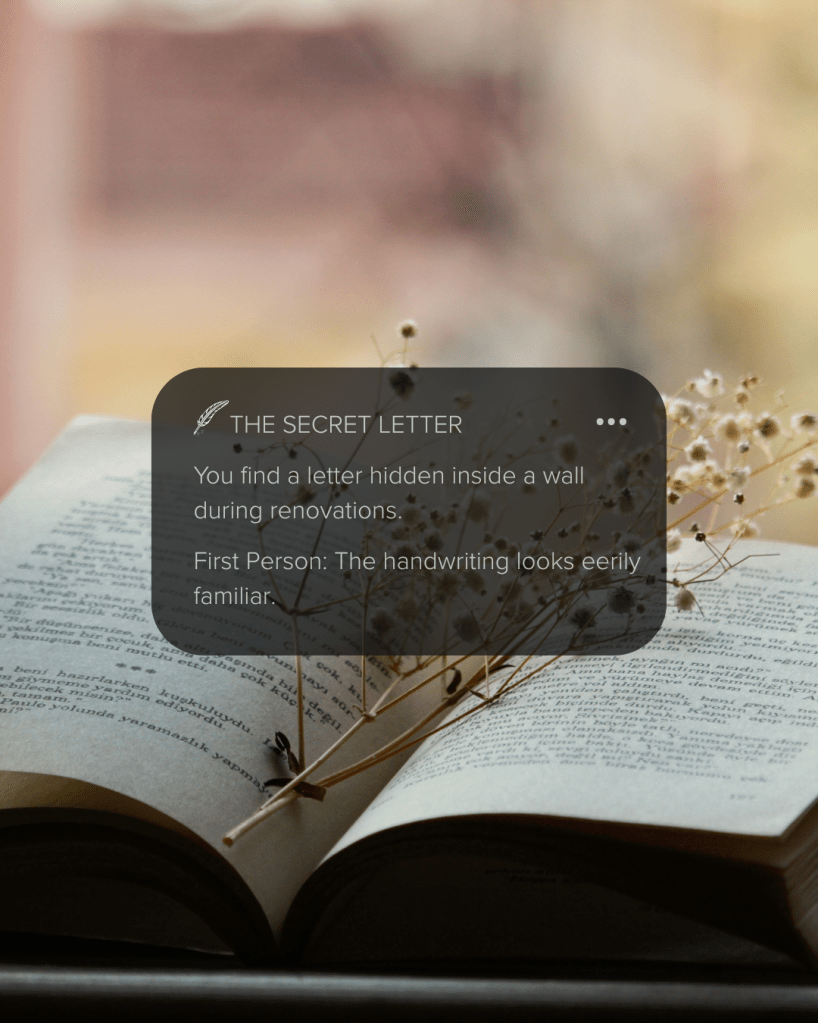
The Secret Letter
You find a letter hidden inside a wall during renovations.
First Person: The handwriting looks eerily familiar.
Third Person Limited: Focus on one character’s internal reaction.
Omniscient: Let readers know what’s in the letter before the character opens it.
The Betrayal at Dinner
A long-hidden secret comes to light during a meal.
First, tell it from the betrayer’s POV.
Then, rewrite from the betrayed party’s perspective.
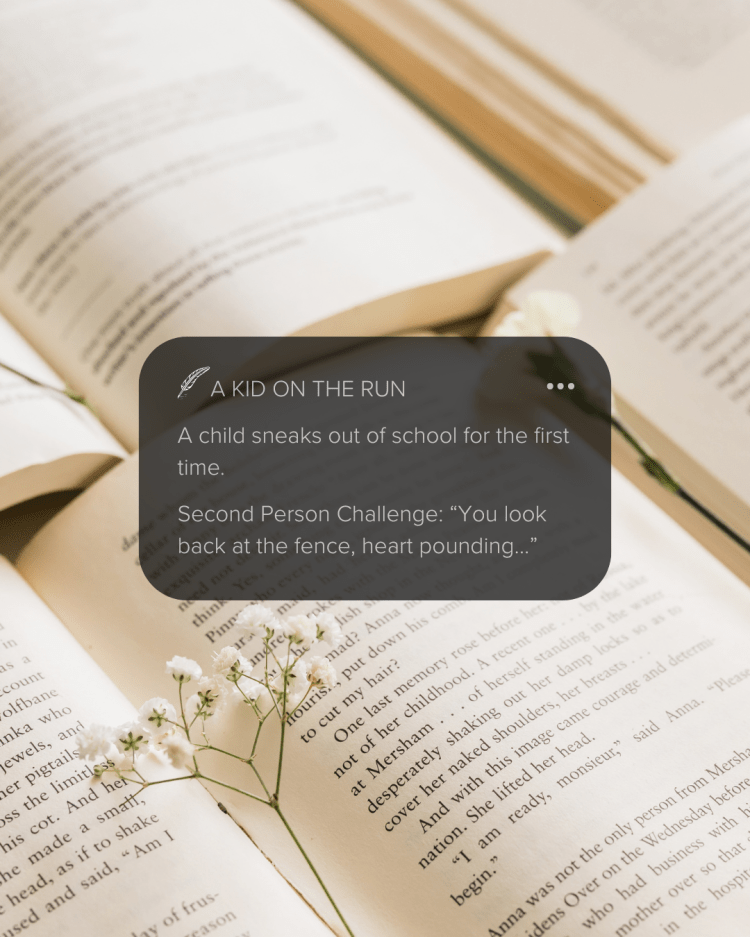
A Kid on the Run
A child sneaks out of school for the first time.
Second Person Challenge: “You look back at the fence, heart pounding…”
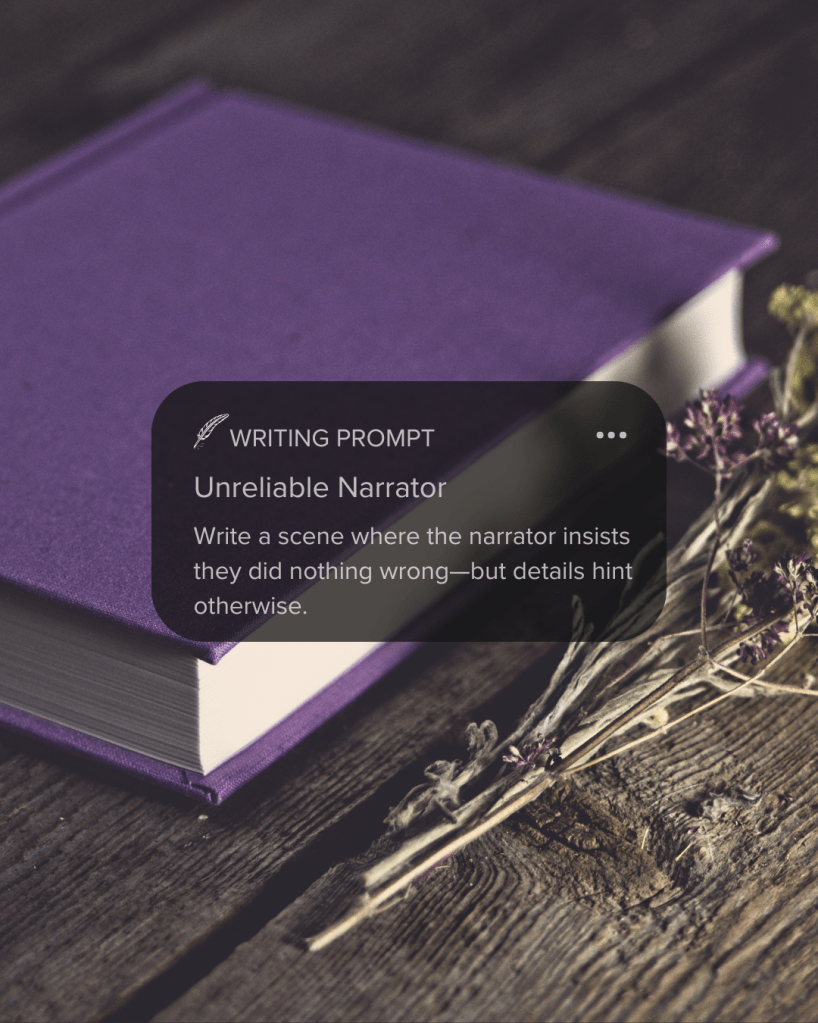
Unreliable Narrator
Write a scene where the narrator insists they did nothing wrong—but details hint otherwise.
Let the reader draw their own conclusions.
Animal’s POV
A pet watches its owners argue in the kitchen.
Explore emotion and observation without using human logic or language.
The Job Interview
Two people. One meeting.
POV 1: The applicant is nervous and desperate.
POV 2: The interviewer is distracted and uninterested.
Switch halfway through.
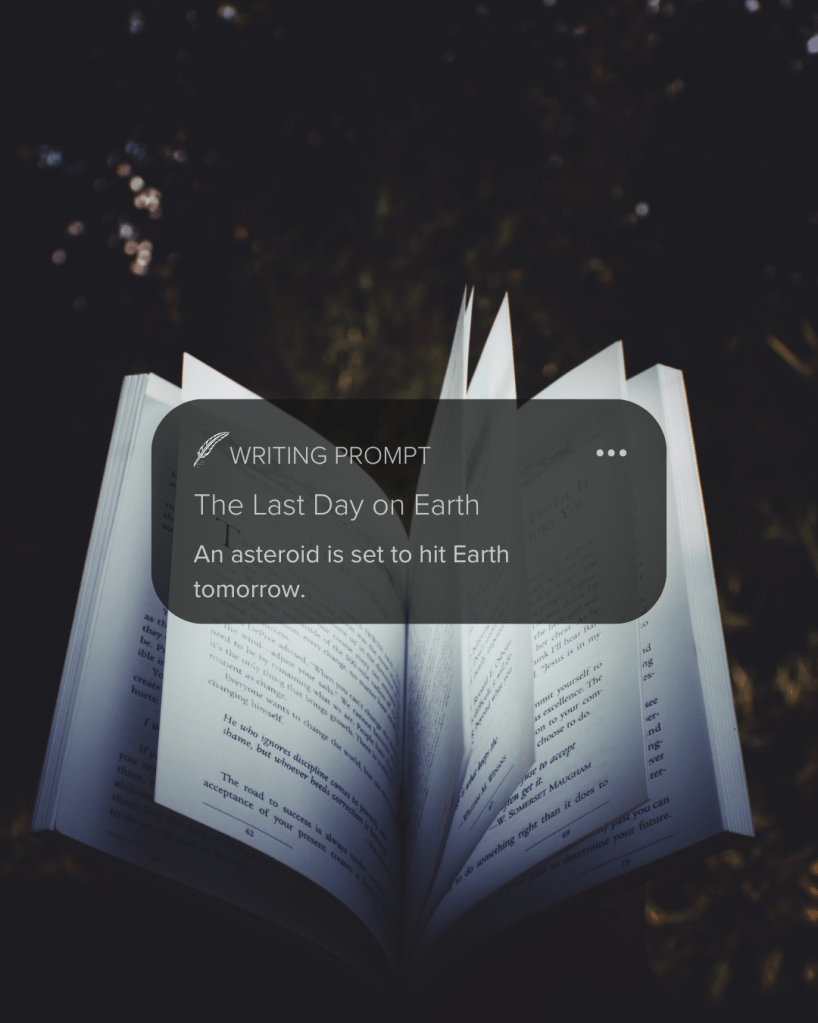
The Last Day on Earth
An asteroid is set to hit Earth tomorrow.
First Person: Capture raw emotion and urgency.
Omniscient: Offer a broader view of multiple lives intersecting.
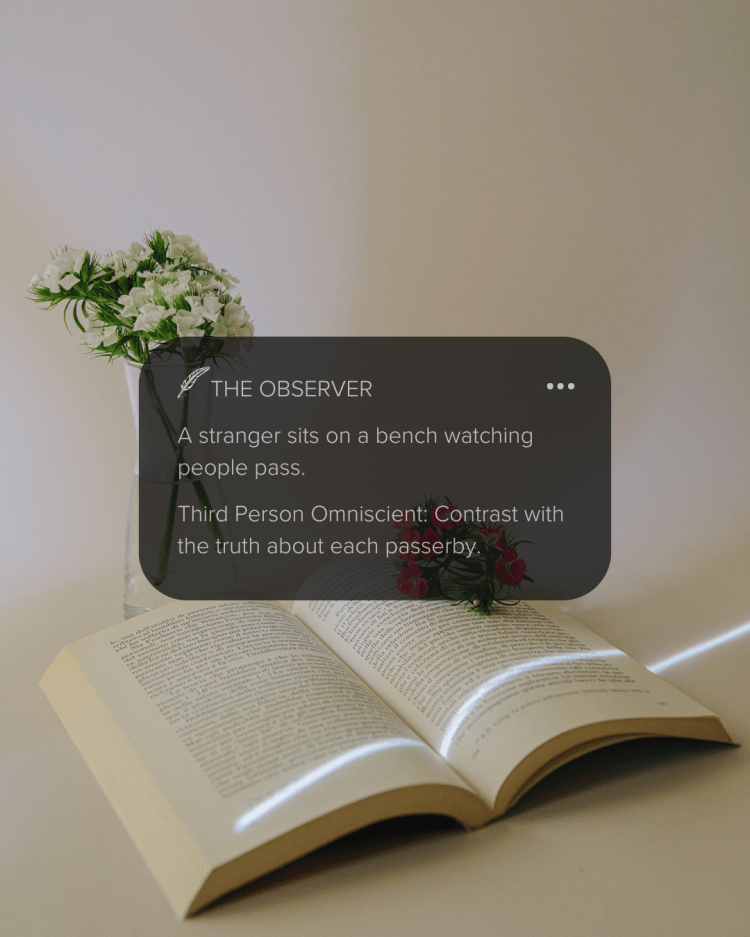
The Observer
A stranger sits on a bench watching people pass.
Omniscient: Contrast with the truth about each passerby.
Third Person Limited: Focus on their thoughts and assumptions.
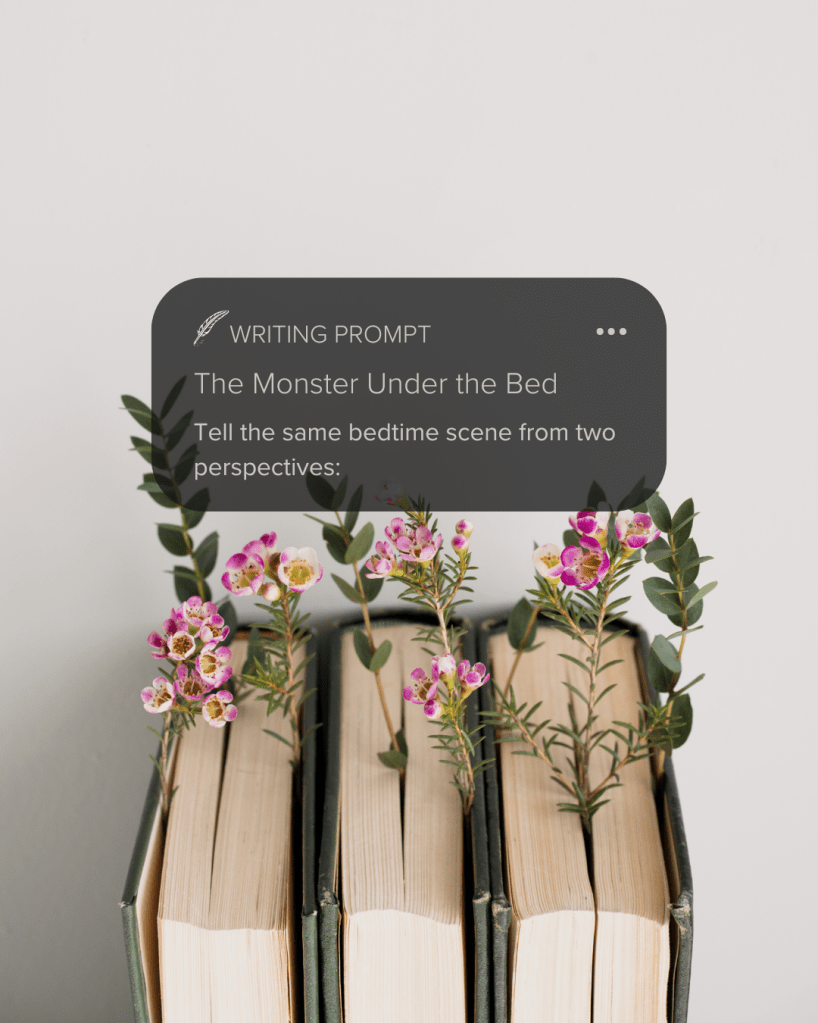
The Monster Under the Bed
Tell the same bedtime scene from two perspectives:
A frightened child.
The so-called “monster.”
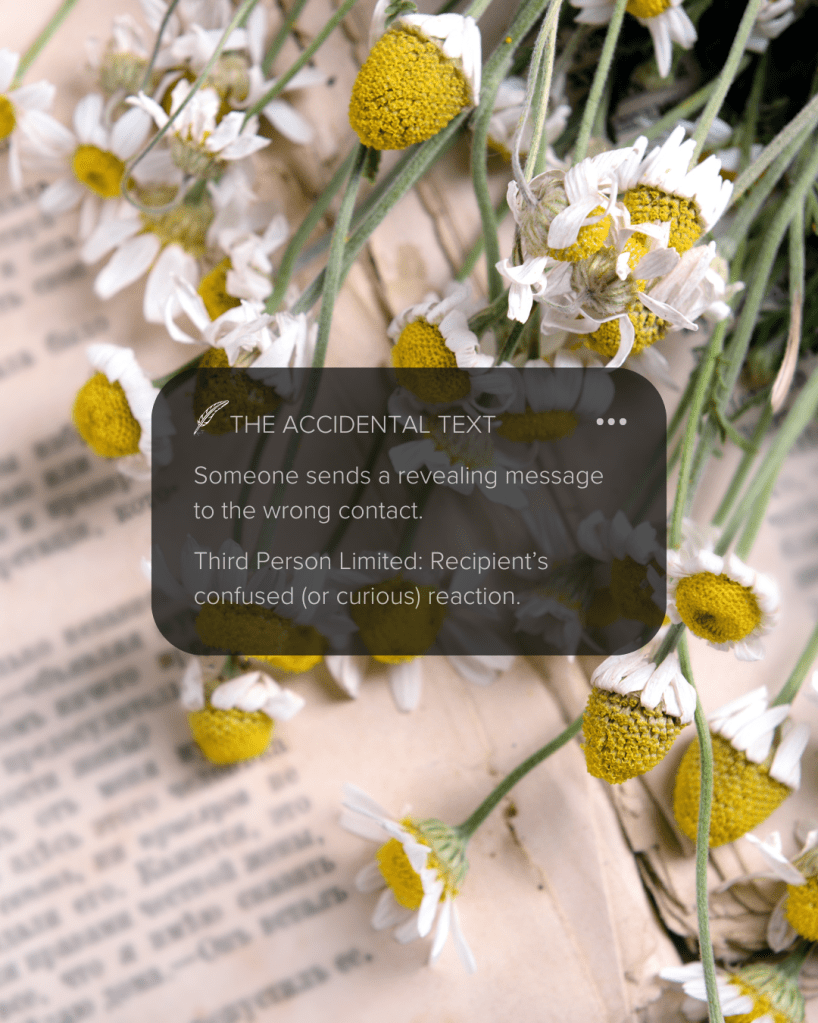
The Accidental Text
Someone sends a revealing message to the wrong contact.
First Person: Embarrassed sender.
Third Person: Recipient’s confused (or curious) reaction.
One Scene, Three Ways
Pick one prompt and write it in:
Omniscient Notice how the emotional weight, pacing, and perspective shift.
First Person
Third Person Limited
Writers, Your Turn!
Which prompt grabbed your attention? Did a new POV spark an idea for your current project? Share your favourite snippet in the comments or tag me on Instagram @AuthorServicesBySarah to show off your creative take.
More Writing Tools for Indie Authors
Sign up for my Substack for weekly prompts, publishing tips, and indie author resources delivered straight to your inbox.
Need support with your novel? Explore my Virtual Assistance Serviceshere.
Social media plays a big role in the success of an author. This is where you interact with your fans. But how do you convert a person from reading one book to becoming a brand ambassador? After word of mouth, social media is one of the best ways to sell your books. Here are some top tips to get you started:
Define your goals. How can you measure your social media success if you don’t know what you are working towards? Make a shortlist of what you want to achieve.
Get to know your audience. These are the people you are posting for. Give yourself the best chance of getting to know them. Do you know where your readers spend most of their time? A reader of Young Adult books may not have the same needs as someone reading Historical Fiction. Tailor your activities to achieve the best results.
Be consistent. When you follow someone online, it creates a bond. Imagine they regularly post, and you become invested in what they have to say. Now imagine they went silent for weeks or even months, would you seek out their posts as before? Probably not. You can’t expect your fans to either.
Post engaging content. Your audience will want to be entertained as well as informed. Having varied and exciting content keeps your fans wanting more.
Does this sound all a bit too much? That’s because it can be! Large companies have full teams dedicated to social media! Over these blog posts, I will share my strategies with you to make this mammoth task seem much easier!
I will be explaining the pros and cons of taking your books wide. I must note that one size does not fit all. This is a very personal decision that will require deliberation.
My first piece of advice when considering moving to the wide strategy would be to take a look at your genre. How many authors are in KDP and how many are wide? This should give you a good idea as to whether your books have a decent-sized audience outside of KDP.
Amazon
Amazon created a platform that allows individuals to sell their books without the need to go through publishing houses. They are one of the largest distributors of eBooks in the world. In the US and UK, Amazon holds roughly 80% of the eBook market.
One of the key benefits of KDP is Kindle Unlimited. This means that all readers signed up for the program have free access to all available ebooks. The reason that this is a good thing for authors is that the readers enrolled are usually loyal to Amazon. They are more likely to read KU ebooks.
Amazon offers a generous royalty fee of up to 70% royalties for sales in select countries. They also allow authors to create sales and deals periodically to help them drive book sales.
Going Wide
Amazon may be the most dominant distributor in the US and the UK however this is not the case in other countries. For example, in Canada, Kobo holds over 25% of the ebook market. In Germany, Tolino and Amazon have equal ebook market share.
KU is only available in these selected countries United States, United Kingdom, Canada, Germany, France, Italy, Spain, Brazil, Mexico, India, Japan, and Australia. By going wide you can build a worldwide presence outside of Amazon.
Becoming a wide author can give you more freedom over your eBooks in terms of price points, sales, and marketing.
The best thing to do is assess where you are now and where you would like to be. Where are you aiming for your books?



 Author Services by Sarah